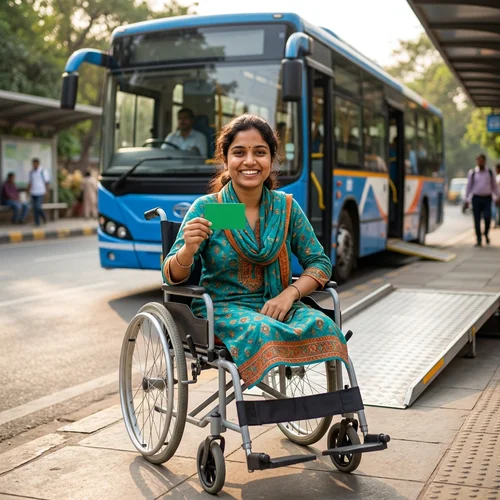
Tax 80U & 80DD: दिव्यांगजन और परिवार ₹75,000 से ₹1,25,000 तक Income Tax छूट कैसे लें? (Form 10-IA Complete Guide)
Table of ContentsShow ▾Hide ▴
The Income Tax Act, 1961 provides two powerful tax-saving provisions specifically designed for Persons with Disabilities (Divyangjan) and their families: Section 80U and Section 80DD. Under these sections, eligible taxpayers can claim a flat tax deduction of ₹75,000 or ₹1,25,000 from their gross taxable income — without needing to submit a single medical bill or expense receipt!
1. Difference Between Section 80U and Section 80DD
Many taxpayers get confused between 80U and 80DD. Here is the exact difference:
| Feature | Section 80U (Self Disability) | Section 80DD (Disabled Dependent) |
|---|---|---|
| Who Claims the Deduction? | The Disabled Person (Taxpayer) himself/herself | Parent, Spouse, Sibling, or HUF caring for a disabled dependent |
| 40% to 79% Disability | ₹75,000 Flat Deduction | ₹75,000 Flat Deduction |
| 80% or More (Severe Disability) | ₹1,25,000 Flat Deduction | ₹1,25,000 Flat Deduction |
| Are Medical Bills Required? | No (100% Flat Deduction) | No (Flat deduction on maintenance/insurance) |
| Can Both Be Claimed for Same Person? | No — Either the individual claims 80U OR the family member claims 80DD. | |
2. Flat Tax Deduction Amount: ₹75,000 vs ₹1,25,000
- Person with Benchmark Disability (40% to 79%): If the certified disability percentage on your UDID Card / Medical Certificate is at least 40% but less than 80%, you get a flat deduction of ₹75,000 per financial year.
- Person with Severe Disability (80% or Above): If the disability is 80% or more (or multiple disabilities totaling 80%+), you get a flat deduction of ₹1,25,000 per financial year.
3. Do You Need to Submit Medical Bills? (Flat Deduction Rule)
No! One of the biggest advantages of Section 80U and Section 80DD is that it is a fixed, flat deduction. Even if your actual medical or rehabilitation expenditure during the year was ₹5,000, you are still legally entitled to deduct the full ₹75,000 (or ₹1,25,000 for 80%+ disability) from your taxable income under the Old Tax Regime.
4. What is Form 10-IA & When is it Mandatory?
According to Income Tax Rule 11A, to claim deduction under Section 80U or 80DD while filing your Income Tax Return (ITR):
- You must have a valid Disability Certificate / UDID Card issued by a Government Hospital Medical Board / Chief Medical Officer (CMO).
- For conditions such as Autism, Cerebral Palsy, or Multiple Disabilities (and for online ITR verification), filing Form 10-IA on the Income Tax e-Filing portal (incometax.gov.in) before filing your ITR is mandatory. You will need the UDID Number and Form 10-IA Acknowledgment Number in Schedule 80U / 80DD of your ITR.
5. ITR फाइल करते समय 80U / 80DD छूट कैसे क्लेम करें?
- Step 1 — Login to Income Tax Portal: Visit incometax.gov.in and log in using your PAN Card.
- Step 2 — File Form 10-IA Online (If Applicable): Go to e-File → Income Tax Forms → File Income Tax Forms → Form 10-IA and enter your medical authority details and UDID Certificate number.
- Step 3 — Select Old Tax Regime in ITR-1 / ITR-2 / ITR-4: Note that Chapter VI-A deductions (80C, 80D, 80DD, 80U) are available under the Old Tax Regime.
- Step 4 — Enter Details in Schedule VI-A: Select Section 80U (if disabled taxpayer yourself) or Section 80DD (if claiming for disabled child/spouse/parent/sibling), choose 40%+ (₹75,000) or 80%+ Severe (₹1,25,000), and enter your UDID/Form 10-IA acknowledgment number.
6. Frequently Asked Questions (FAQs)
Q1. क्या New Tax Regime में Section 80U या 80DD की छूट मिलती है?
उत्तर: नहीं, Section 80U और 80DD की छूट केवल Old Tax Regime चुनने पर मिलती है। (हालाँकि दिव्यांग कर्मचारियों को मिलने वाला Transport Allowance छूट दोनों रिजीम में मान्य है)।
Q2. Section 80DD के तहत "Dependent" में कौन-कौन से रिश्तेदार आते हैं?
उत्तर: माता-पिता (Parents), पति/पत्नी (Spouse), बच्चे (Children), और भाई-बहन (Brothers & Sisters) जो दिव्यांग हैं और आप पर आश्रित हैं।